Energy & utilities
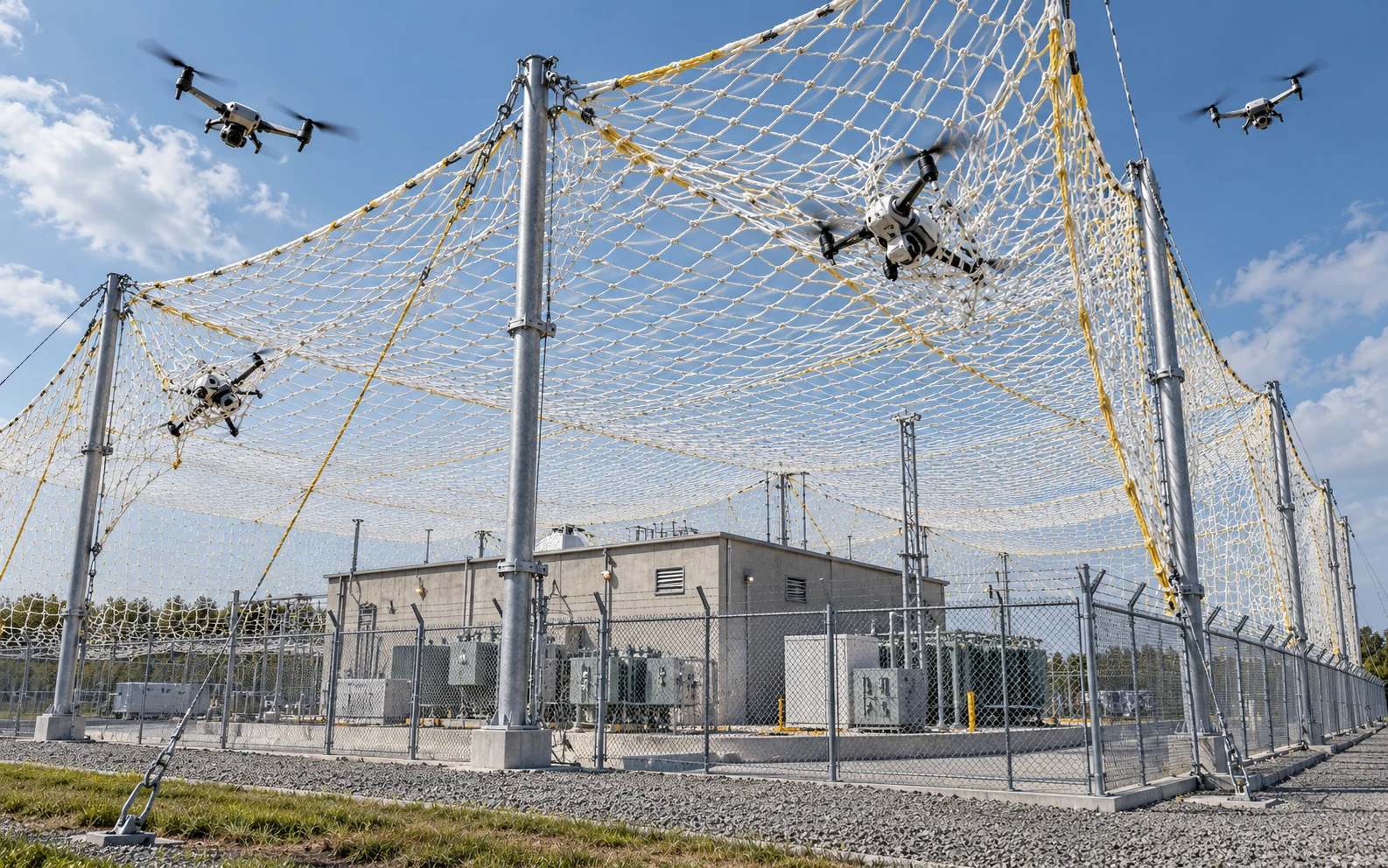
Transformers, switchgear, fuel storage and associated equipment zones. Electrical, environmental and access requirements form part of the project brief.
Counter-UAS netting for facilities, equipment and infrastructure. Explore material options, netting series and configurations for overhead and perimeter protection.
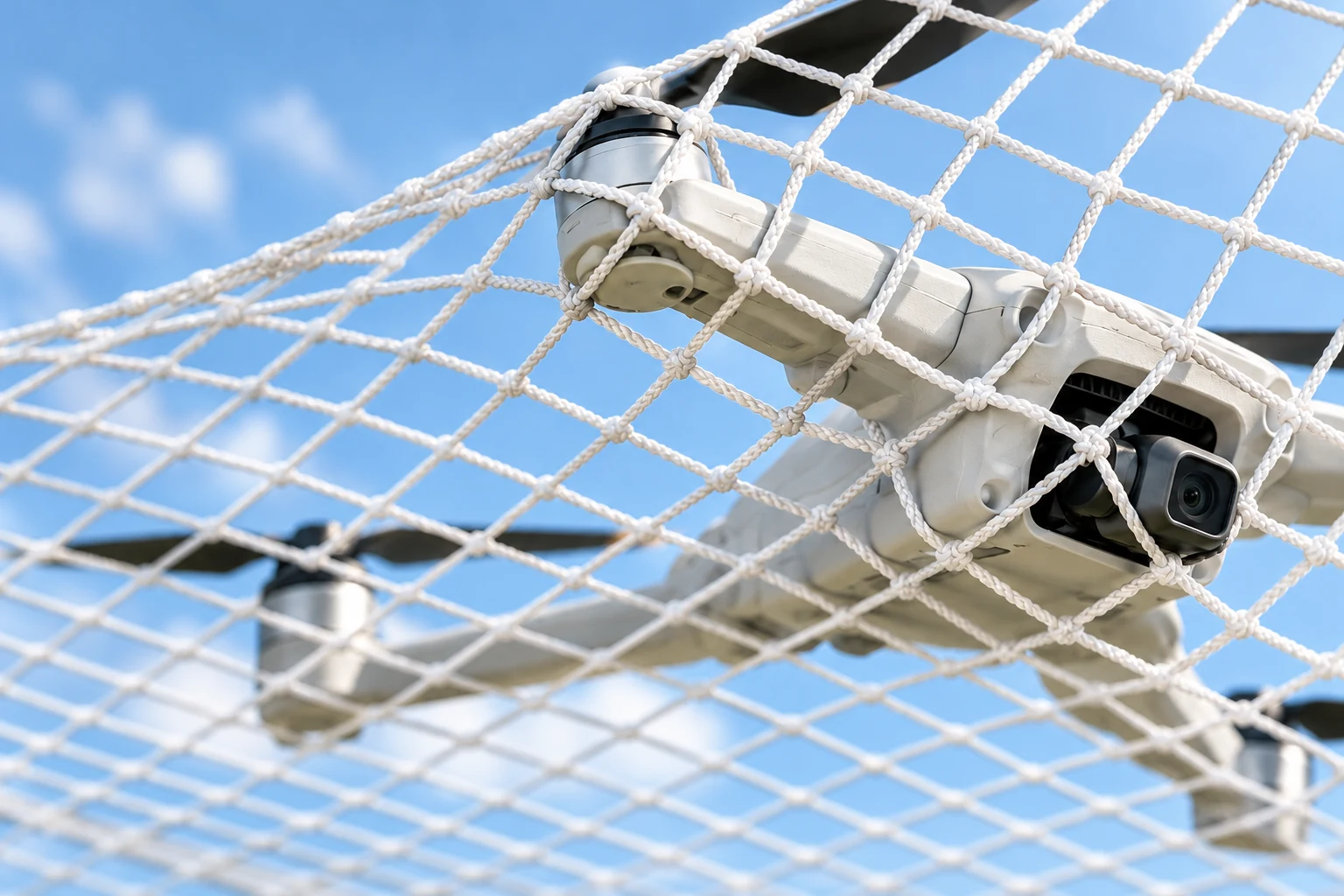
Counter-UAS protective netting forms a physical barrier around or above selected assets. Netting, tensioning cables, support members and anchorage are considered together to suit the site and its protection requirements.
Material, mesh geometry and net construction are part of the specification. Support frames, tensioning and anchorage also need to suit the protected asset, installation conditions and required performance.
Series selection and final performance values depend on project requirements, certified test reports and measured results.
Transformers, switchgear, fuel storage and associated equipment zones. Electrical, environmental and access requirements form part of the project brief.
Industrial buildings, warehouses, building openings and ventilation areas. Coverage can be considered above equipment or around selected access points.
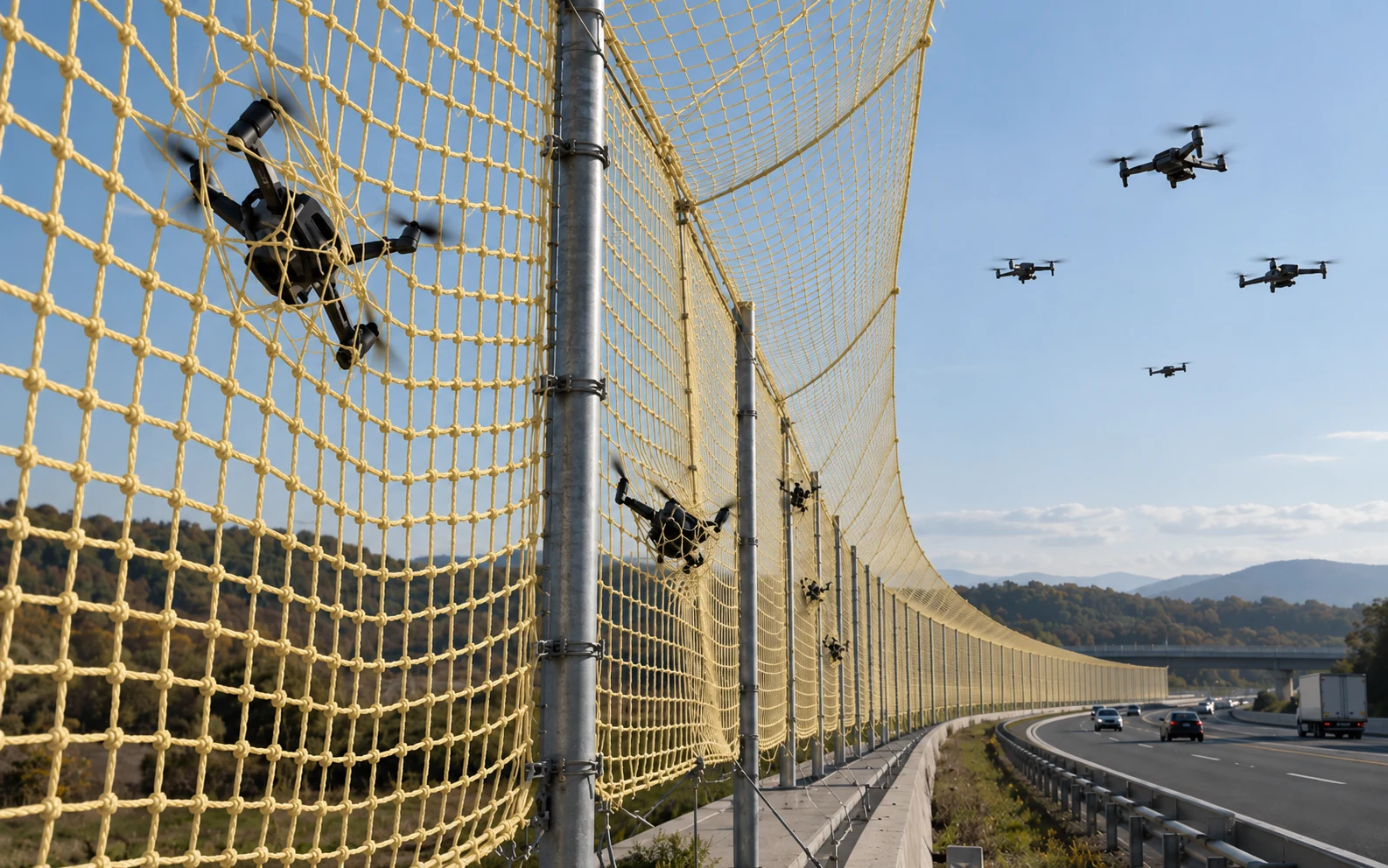
Transport routes, road nodes and stationary mobile assets. The brochure includes temporary support and deployable netting concepts.
Offshore platforms, cargo areas and communications equipment. Corrosion exposure, maintenance access and RF requirements need project-specific review.
A starting point for product selection, based on the supplied brochure. Final suitability depends on the complete installation and validated performance.
PP, PET or UHMWPE warp-knitted knotless netting. Focused on portability and lightweight protective applications.
High-strength PP, PET or UHMWPE warp-knitted knotless netting, balancing deployment efficiency and energy absorption.
High-strength aramid or UHMWPE knotted netting. Construction is selected around the required deformation and energy absorption behavior.
Aramid or UHMWPE knotted netting in a multilayer arrangement. Twine diameter and layer spacing are specified for the project.
Coordinate the netting with its support and connection system. Component selection and verification should follow the installation requirements.
Identify the protected assets, site dimensions, coverage and target performance.
Consider netting, supports, connection points, environmental exposure and maintenance access together.
Agree the required test evidence, inspection records and project acceptance requirements.
Select a page to view the original image at full resolution.
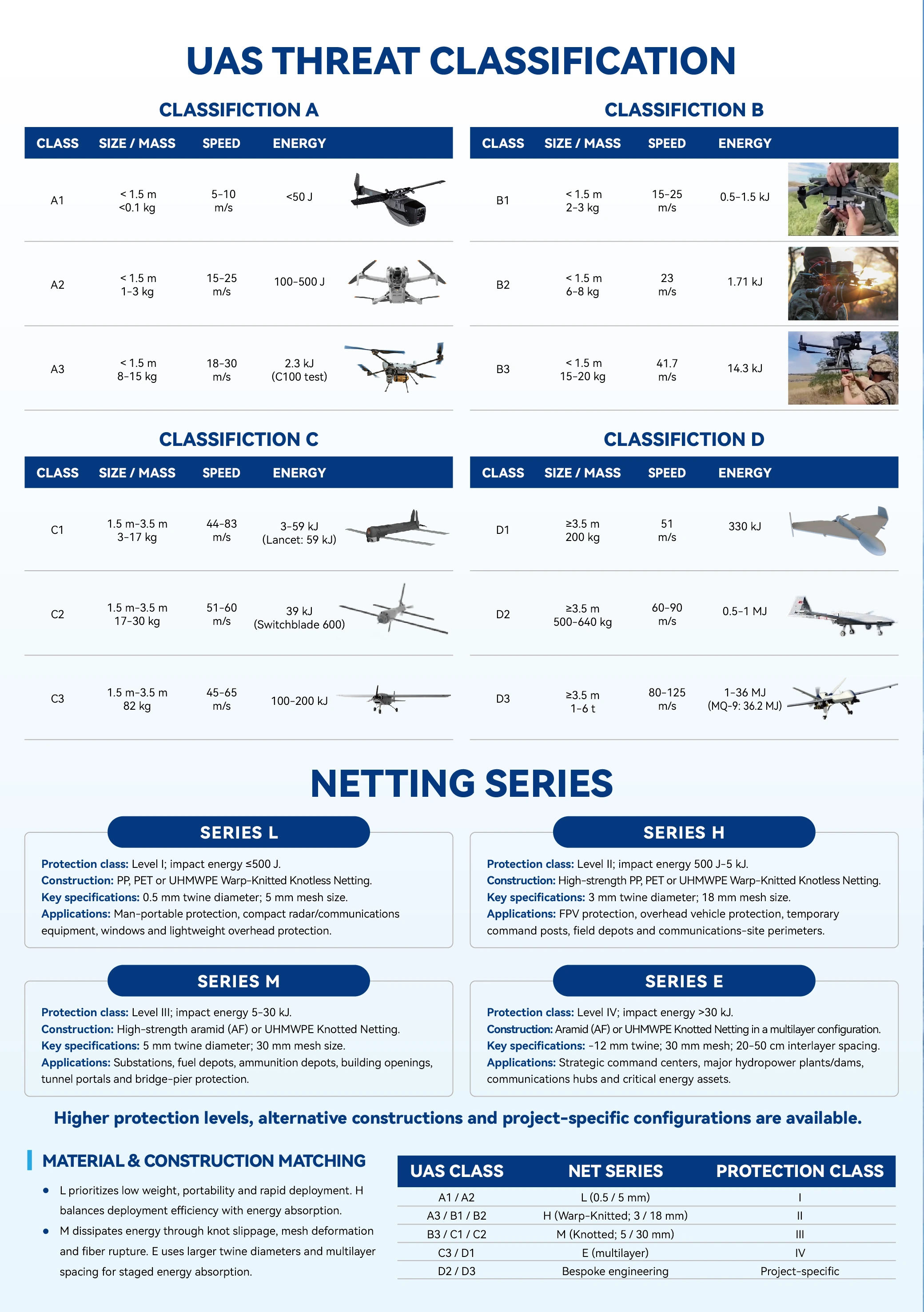
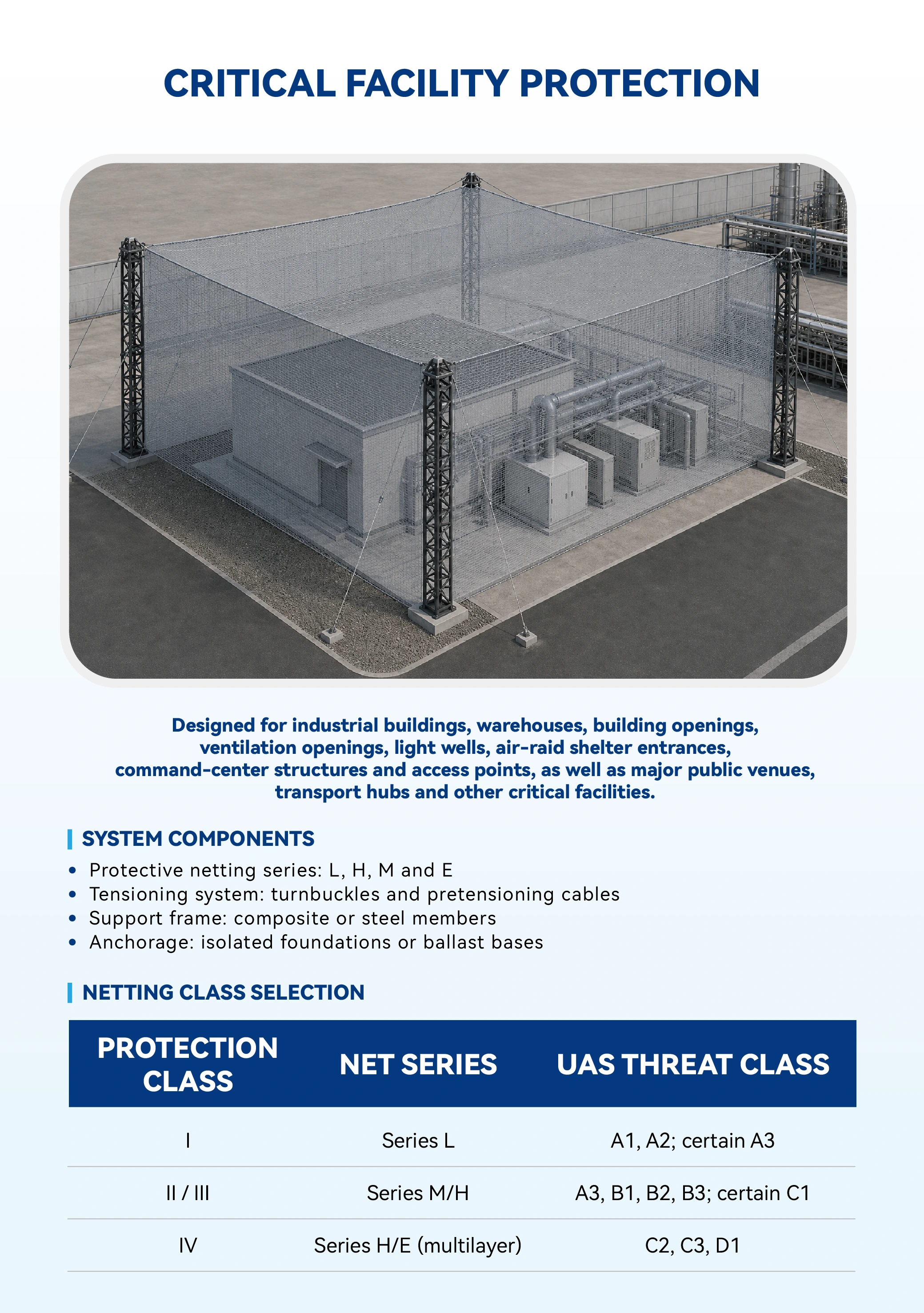
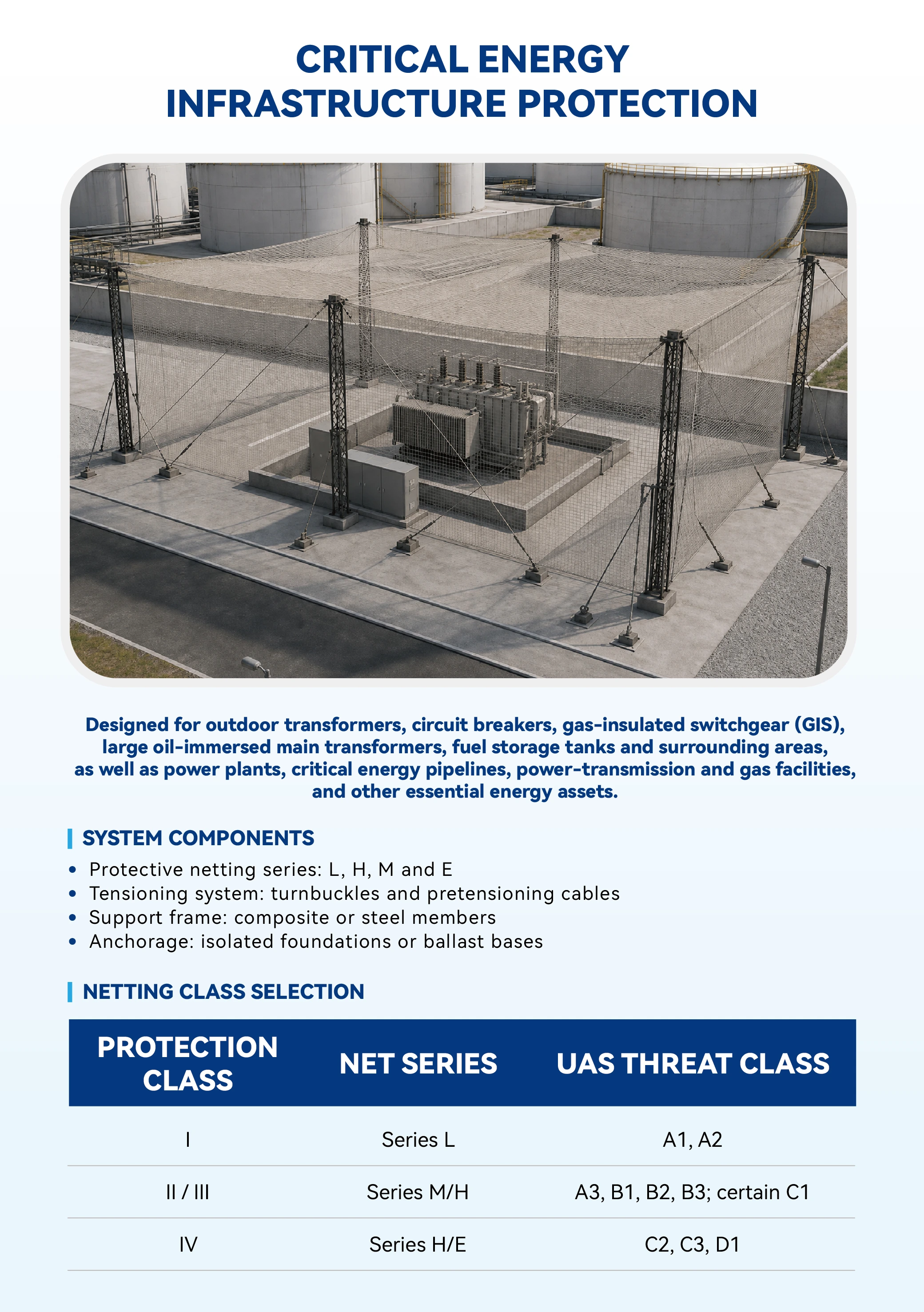
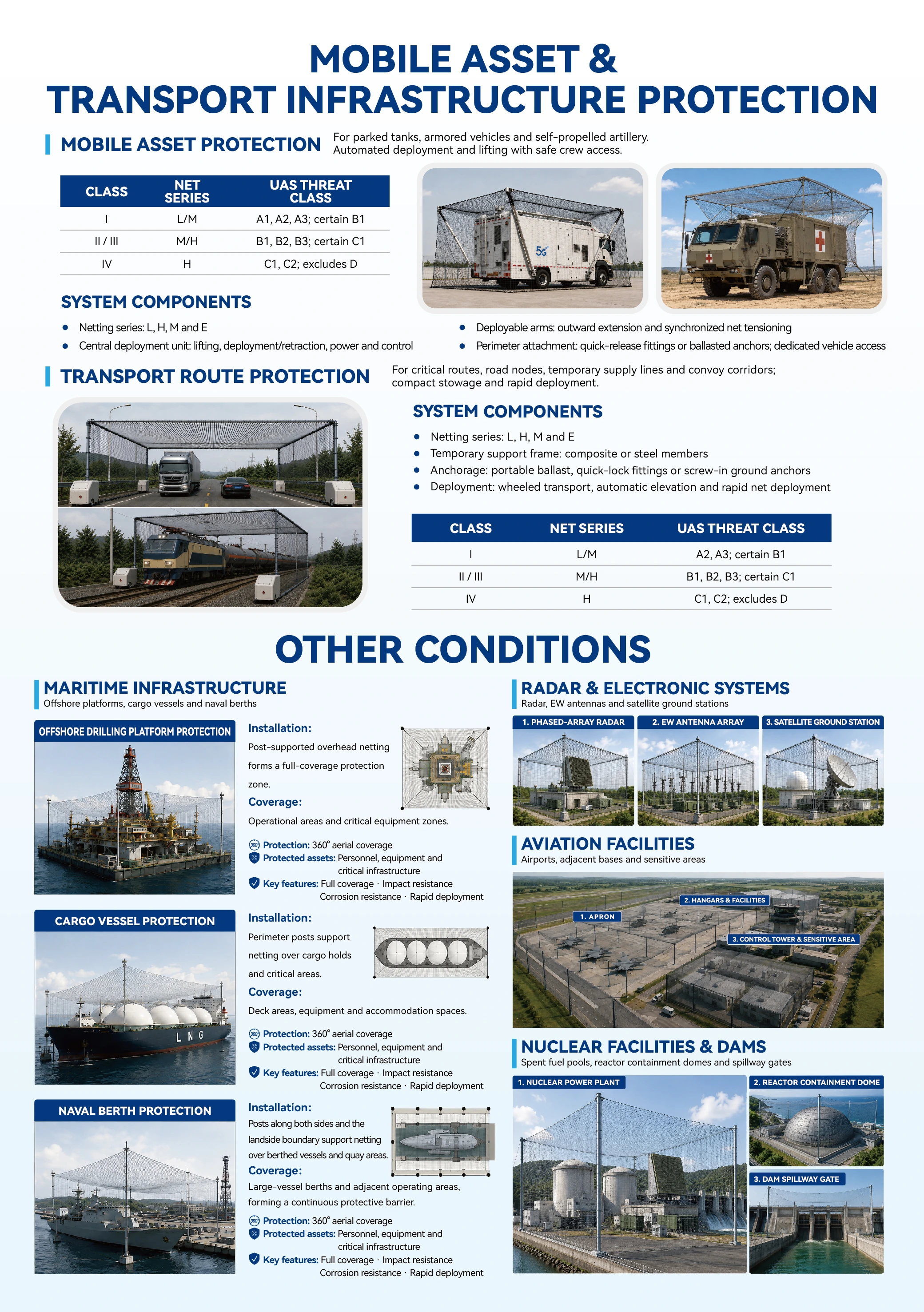
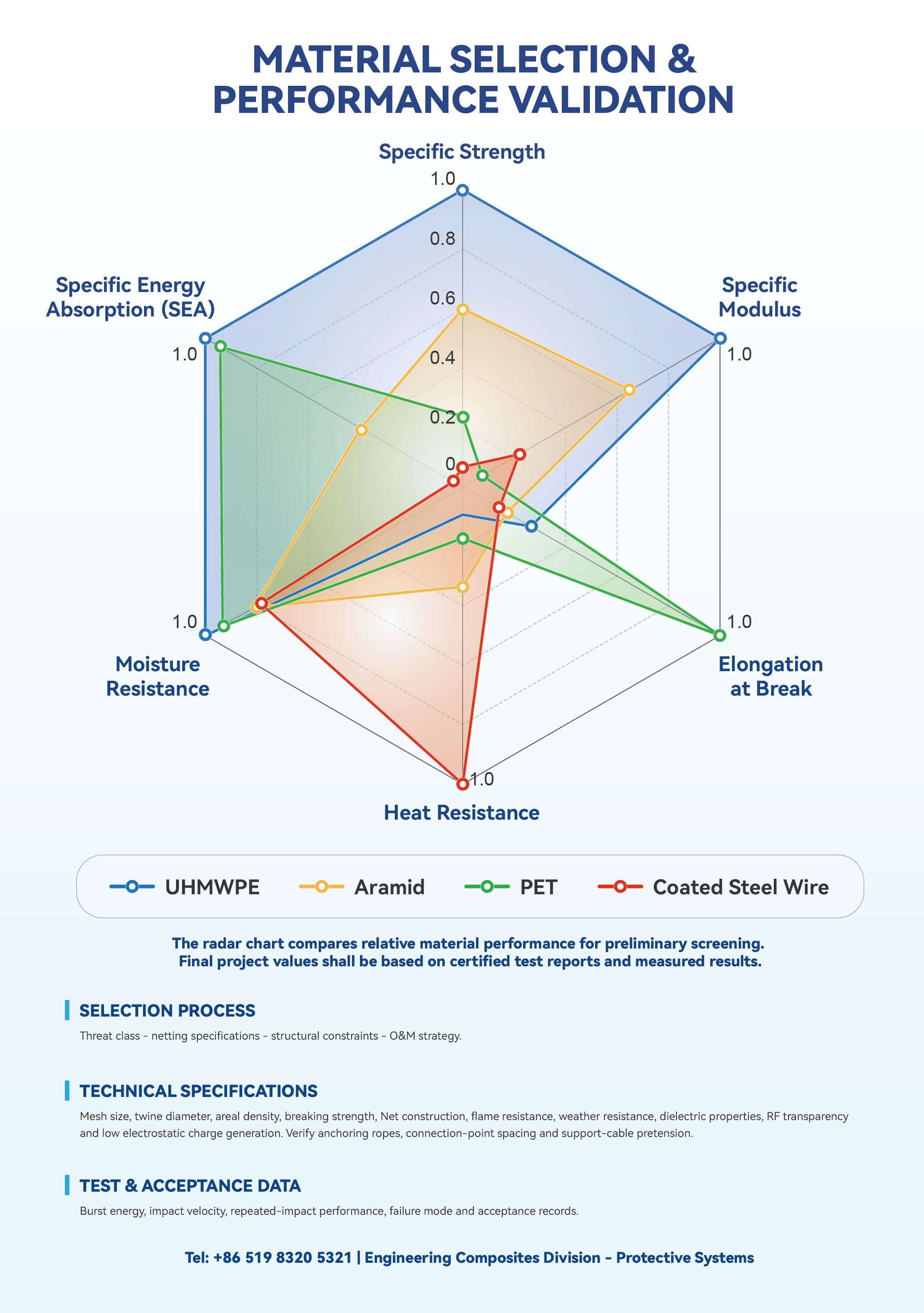
Selection begins with the threat class, netting specification, structural constraints and maintenance strategy. The brochure introduces four series; the appropriate configuration must be confirmed for each project.
Review the support frame, anchoring ropes, connection-point spacing and support-cable pretension alongside the netting. Environmental and material requirements should be included in the project specification.
Relevant acceptance data include impact energy and velocity, repeated-impact performance, failure mode and acceptance records. Material comparison charts in the brochure support preliminary screening; they do not replace project test results.
Share the asset type, site dimensions, required coverage, installation constraints, target performance, quantity and delivery destination.